
High-yield maize is a heavy feeder. It needs a steady supply of nitrogen, potassium and phosphorus through the season, and the largest demand comes during the period of rapid stem and leaf growth. A plan built around that window usually produces better results than an even spread of the same total rate, because the crop cannot use nitrogen that arrives before it has the leaf area to capture it or after it has stopped growing.
Maize is grown in many systems, from rainfed smallholder fields to fully irrigated commercial farms. The nutrient demand is similar, but the timing and the loss risk differ. Irrigated maize can take up more nitrogen through the season, while rainfed maize is more exposed to drought stress that reduces uptake. The guidance below describes a general framework that can be adjusted for local conditions.
The rapid-uptake window
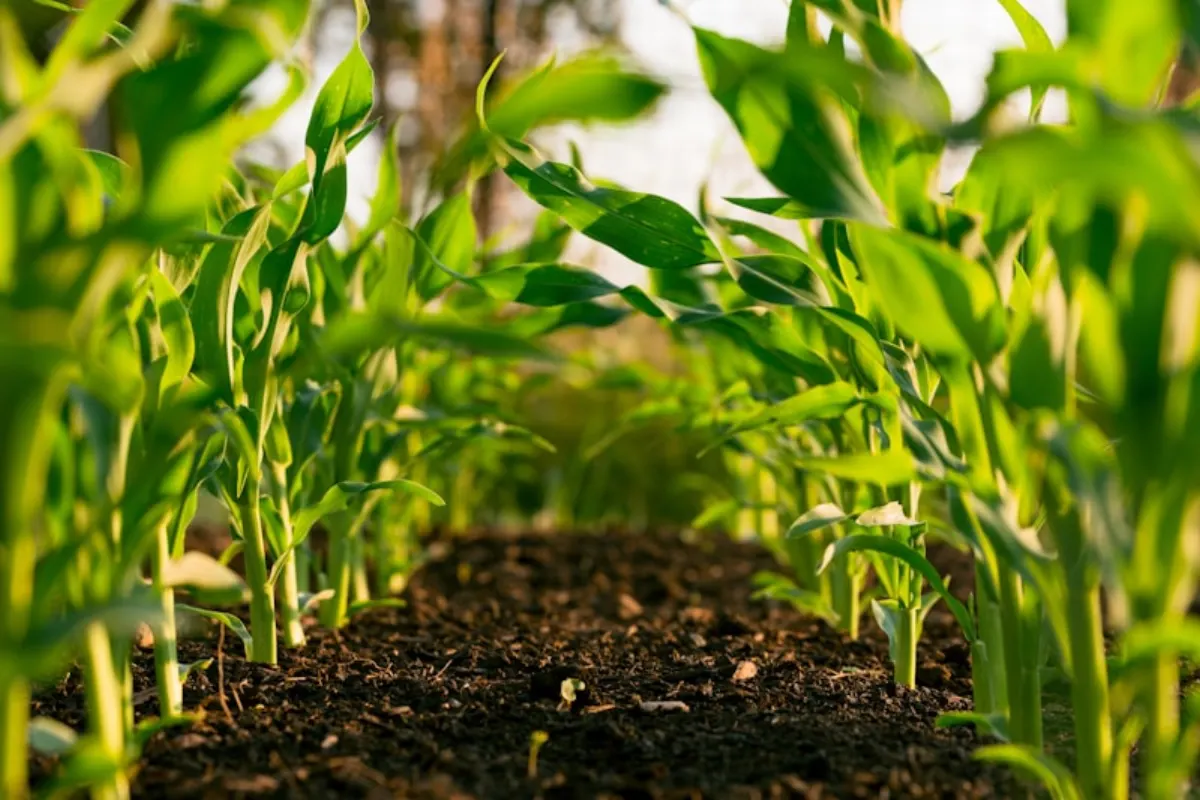
Most nitrogen uptake in maize happens between the early vegetative stages and tasselling, with the steepest part of the curve in the weeks before silking. During this period the crop builds the leaf area that will capture light for grain filling, and it needs a large and steady supply of nitrogen to do so. Applying all the nitrogen at planting risks losses before the crop can use it, particularly on wet or sandy soils where nitrate leaches below the root zone.
| Growth stage | Nutrient focus | Practical note |
|---|---|---|
| Emergence to early vegetative | Phosphorus and starter nitrogen | Supports root establishment |
| Rapid growth, around the sixth to eighth leaf | Nitrogen, potassium | Main nitrogen top-dress window |
| Tasselling and silking | Nitrogen, potassium | Supports kernel set |
| Grain fill | Potassium | Supports kernel weight and stalk quality |
The sixth to eighth leaf stage is a practical marker for the main top-dress, because it is visible in the field and it comes before the crop's most rapid uptake. A top-dress applied too late, after tasselling, may not be taken up in time to affect kernel number, which is set around silking. Timing therefore has a direct effect on yield, not just on the convenience of the field operation.
Split application or one pass
Split application gives growers the most control, because each dose can be matched to crop condition, soil moisture and the weather forecast. The trade-off is the extra pass through the field, which costs fuel and labour, and in wet seasons it may not be possible at the right time. Where the field is hard to enter at the planned date, a single well-timed application can be a sensible alternative.
A controlled-release product applied at planting can reduce the number of passes, but it must be matched to the crop's uptake curve and the local climate. The release rate depends on temperature and moisture, so a product that releases well in a cool season may release too quickly in a hot one. Growers should check the release data for their region and compare the expected nitrogen supply with the crop's demand at each stage.
Potassium and phosphorus
Potassium supports stalk strength, disease resistance and kernel weight. A maize crop that is short of potassium is more likely to lodge in the late season and to suffer from stalk rot. Maize removes large amounts of potassium in grain and stover, so the maintenance dose for a high-yielding field can be considerable. Where stover is removed, the potassium removal is higher still, and the soil reserve will fall faster.
Phosphorus supports early root growth and should be placed near the seed or banded, especially in cool soils where the early root system is slow to develop. Banded phosphorus at planting is one of the most effective ways to supply early phosphorus, particularly on soils that fix phosphate strongly. Soil tests guide the rates, and the crop's removal in harvested grain helps set the maintenance level for each field.
Irrigation and water management
Water is one of the main controls on nitrogen uptake in maize. Dry soil slows the movement of nitrate to the roots, and a top-dress applied into dry soil may sit on the surface until rain arrives. Irrigated maize can take up nitrogen more evenly, but over-irrigation can leach nitrate below the root zone, particularly on sandy soils. Matching the fertilizer schedule to the irrigation calendar reduces both problems.
Where rain is unreliable, growers should plan the top-dress for the period before a likely rain, and avoid applying a large dose ahead of a dry spell. Soil moisture sensors or a simple probe can show whether the root zone is moist enough to take up the nitrogen, and the decision can then be made on the basis of what is happening in the field rather than the calendar.
Putting the plan together
- Set the yield target and use a soil test to estimate what the soil will supply, including its organic matter contribution.
- Plan the nitrogen as a base dose plus one or more top-dresses, or a controlled-release base plus a top-dress if the field is hard to enter later.
- Keep potassium and phosphorus at recommended levels, and check micronutrients if the crop shows symptoms.
- Record the timings, the weather and the field's history, so the next season's plan can be improved with evidence.
Common questions
How much nitrogen does a high-yield maize crop need? The total depends on the yield target, the soil supply and the previous crop. The soil test and the regional recommendation give the starting point, and the crop's appearance and tissue analysis refine it during the season.
Can I rely on a single application? A single application can work on well-drained soils with a reliable rainfall pattern, particularly when a controlled-release product is used. On wet or sandy soils, a split programme usually gives better efficiency and lower loss.
Why does maize show zinc deficiency? Zinc is often short in alkaline or heavily worked soils, and it shows as pale, striped young leaves and stunted growth. A zinc soil or tissue test confirms the deficiency, and foliar or soil zinc corrects it.
Does maize need sulphur? On soils low in sulphur, particularly those cropped intensively without sulphur-containing products, sulphur can limit yield. The soil test for sulphate shows the need, and the crop's yellowing of young leaves is a supporting sign.
- International Plant Nutrition Institute (IPNI), maize nutrient management resources.
- Yara, public crop nutrition guidance for maize.
- University extension publications on maize nitrogen and potassium recommendations for the region.
- Ciampitti, I.A. and Vyn, T.J., published reviews on maize nutrient uptake and removal (academic literature).
Recommendations depend on local soil, climate and crop conditions. Follow the product label and local regulations, and consult a qualified agronomist for field decisions.