
Variable-rate technology is now standard on new spreaders and sprayers in most markets, and retrofit kits are inexpensive. That has changed the question. A decade ago the debate was whether the hardware could do it; today the hardware can, and the decision is whether a particular field is variable enough to make the prescription worth writing.
For many fields the honest answer is that it is not, at least not for every nutrient. Variable rate does not create nutrition. It moves it, from places where it is not needed to places where it is, and the value of that movement depends on how much the field actually varies, how stable that variation is, and whether the nutrient in question is the one holding back yield.
What variable rate actually changes
Three different practices are usually bundled under one label, and they have very different economics. Prescription-based application divides the field into zones, and the controller changes the rate as the machine crosses them. Sensor-based reactive application reads the crop or the soil in real time and adjusts on the move. Section control simply switches nozzles or spouts off over overlaps, headlands and previously applied ground.
Section control is the cheapest of the three and usually the first to repay. Spinner spreaders and wide booms overlap heavily on headlands, on wedge-shaped corners and along boundaries that do not match the implement width, and the waste is easy to measure once the machine logs as-applied data. Turning sections off over ground already covered is a pure input saving that needs no agronomic judgement and no map.
Where fields vary enough to matter
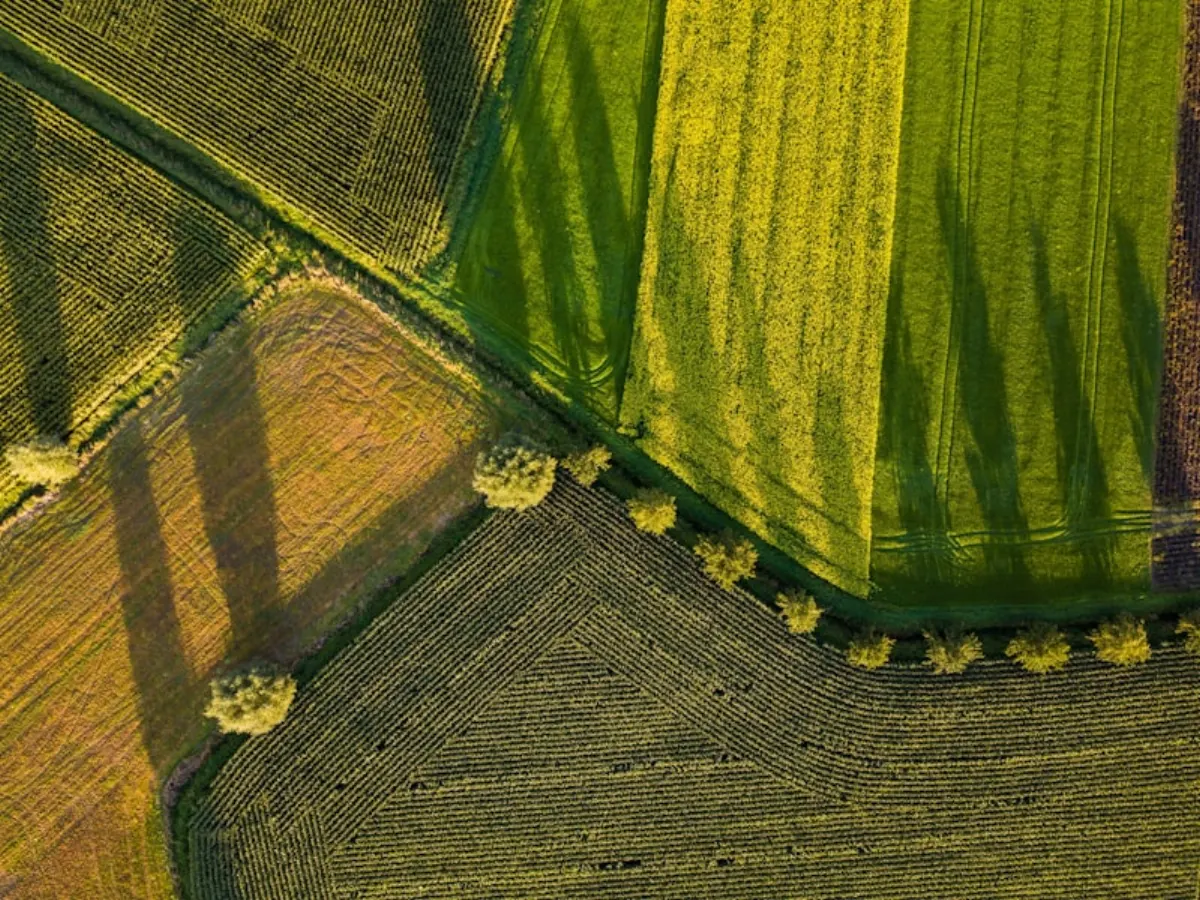
Variation has to clear three hurdles. It must be real rather than an artefact of sampling, it must persist across seasons rather than reflecting one wet spring, and it must sit in a nutrient that is actually limiting yield, because spreading more of a nutrient the crop already has in surplus buys nothing.
Phosphorus and potassium are the strongest candidates. Both are relatively immobile, so a pattern created by past manure placement, old field boundaries, erosion or a change in parent material tends to stay put for years. A zone map built for potassium in one season is often still useful three seasons later, which spreads the mapping cost over several crops and several nutrients. Nitrogen is the weakest candidate for a static map: nitrate moves with water, is transformed by soil microbes and is lost through leaching, denitrification and volatilisation, so a map that described the field in March may mislead by June. Variable-rate nitrogen therefore depends on in-season information, and the cost of getting it wrong is higher because nitrogen usually carries the largest yield leverage.
| Nutrient | How the pattern behaves | Most suitable approach | Data needed |
|---|---|---|---|
| Phosphorus | Stable over years; tied to soil type and past applications | Zone prescription, refreshed every few seasons | Georeferenced soil samples, yield history |
| Potassium | Stable, but affected by removal in stover and hay | Zone prescription with a removal balance | Soil tests plus yield and residue records |
| Nitrogen | Changes within weeks; driven by water and temperature | Sensor-based or split application with in-season data | Crop sensing, soil moisture, weather, tissue tests |
| Lime and pH | Very stable; strongly affects nutrient availability | Zone prescription, mapped once and maintained | pH from the same sample set |
A quick diagnostic comes first. If soil tests across a field sit in a narrow band that is already above the critical level for the crop, the field does not need a prescription; it needs a lower uniform rate. Variable rate becomes interesting when the field spans a critical threshold, so that part of it is deficient and part is in surplus.
The measurement chain
No prescription is better than the samples behind it. Sampling error is usually the largest single contributor to uncertainty in a nutrient map, larger than laboratory error and much larger than the accuracy of the spreader. A grid or zone design that collects too few cores per unit produces a map that looks precise and is not, and the machine then applies a wrong rate with great accuracy.
Practice has converged on georeferenced sampling at roughly one composite sample per two to four hectares for broadacre crops, with denser sampling for high-value crops or fields with a history of manure or variable texture. Each composite should be built from cores taken across a defined area, kept separate by depth, and recorded with coordinates so the same points can be resampled; returning to the same points is what makes change over time readable. Zones can be built from yield maps over three or more seasons, apparent electrical conductivity, elevation and slope, or bare-soil imagery, clustered into three to five units and always checked against the grower's own knowledge of the field before it becomes a prescription.
Machinery and the practical ceiling
Variable-rate equipment has a physical limit that is often ignored when zones are drawn: the working width. A spinner spreader with a 24-metre pattern cannot place a distinct rate in a 10-metre strip without changing the rate on either side of it, so zones narrower than roughly twice the working width are better merged. A prescription that ignores this produces a map the machine will silently average.
Calibration matters more, not less, once rates vary. The spread pattern has to be correct at each rate used, not only at the rate used for the calibration test. Prescription files carry their own failure modes too: unit mismatches between the agronomist's software and the controller, outdated field boundaries, and shapefiles whose inner rings are read as holes. A first-season trial on one field, weighed and logged, is the cheapest way to find those errors.
The arithmetic
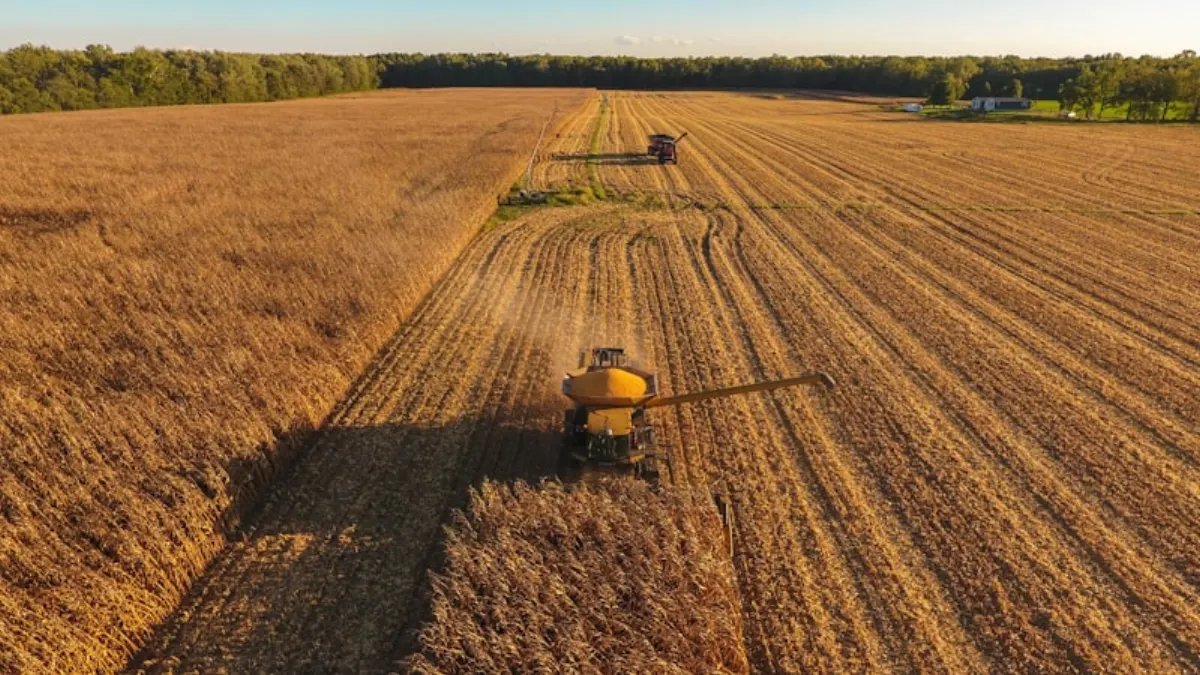
The investment case has two sides. Costs are the mapping and prescription work, the controller or retrofit, and the management time to build the zones and check the results. Benefits are the product saved where the field was in surplus and the yield gained where it was deficient, with section control counted separately because it saves product with no agronomic input. An illustrative field of 100 hectares, where a fifth sits well above the critical level and has been receiving 30 kilograms per hectare more nitrogen than it needs, wastes about USD 720 a year at USD 1.20 per kilogram. If the deficient fifth would respond with 0.3 tonnes per hectare of grain worth USD 200 per tonne, the gain there is about USD 1,200. Against a mapping cost near USD 1,000 at USD 10 per hectare, the margin is thin in a single season, and it disappears if the field turns out to be uniform.
Where it fails
The most common failure is a map that was never validated. A prescription is a hypothesis about the field, and the only way to test it is to log what was actually applied and compare the result with the previous uniform practice. The second is mistaking sampling noise for pattern: if the zone map shows sharp boundaries that correspond to nothing visible in the field, the conductivity data or the yield history, the boundaries are probably an artefact.
The third is treating variable rate as a substitute for a rate decision. Redistribution does not fix an excessive total. Where a farm is applying more nitrogen than the crop can use, the correct response is a lower uniform rate, and variable rate applied on top of an excessive total simply moves the excess around the field at additional cost.
Common questions
Do I need yield maps to build zones? They help but are not essential. Soil sampling, conductivity and elevation can define workable zones on their own, and three or more seasons of yield data make them better. A single season is a weak basis, because one year's weather can dominate the pattern.
How often should zones be rebuilt? For phosphorus, potassium and lime, every three to five years is common, or whenever the sampling cycle comes round. For nitrogen a static zone map is rarely the right tool; in-season sensing or a split programme responds better.
Is sensor-based nitrogen better than a prescription? It responds to the crop rather than to a plan, which suits variable seasons, but it needs a reference area or a well-calibrated algorithm to convert a reading into a rate. Both approaches benefit from being tested against a uniform strip in the same field.
What is the smallest area where it makes sense? It is less about area than about contrast. A 20-hectare field that spans a critical soil test threshold can justify a prescription; a 200-hectare field with uniform fertility may not, beyond section control and a lower uniform rate.
- Hedley, C. (2015). The role of precision agriculture for improved nutrient management on farms. Journal of the Science of Food and Agriculture 95: 12-19.
- Lowenberg-DeBoer, J. and Erickson, B. (2019). Setting the record straight on precision agriculture adoption. Agronomy Journal 111: 1552-1569.
- Mulla, D.J. (2013). Twenty five years of remote sensing in precision agriculture. Biosystems Engineering 114: 358-371.
- International Plant Nutrition Institute. 4R Plant Nutrition Manual, latest edition.
Recommendations depend on local soil, climate and crop conditions. Follow the product label and local regulations, and consult a qualified agronomist for field decisions.