
Urease inhibitors: how they protect nitrogen
Surface-applied urea can lose 15% to over 40% of its nitrogen to the air within days. Urease inhibitors delay that loss and keep more nitrogen available to the crop.
Executive summary
The problem, the cause, the fix and the return, in four points.
The core problem
Urea (CO(NH₂)₂) is the world's main solid nitrogen fertilizer (46% N). Surface-applied without incorporation by tillage or rain, 15% to over 40% of its nitrogen can escape as ammonia gas (NH₃) within days.
The biochemical trigger
Soil and crop residue contain urease, an enzyme that rapidly hydrolyzes urea. The reaction consumes H⁺ and lifts the pH around the granule above 8.5–9.0, turning stable ammonium (NH₄⁺) into volatile ammonia.
The technical solution
Urease inhibitors such as NBPT and NPPT temporarily block the nickel (Ni²⁺) active site of urease for 7 to 14 days. Hydrolysis is delayed, the pH spike is prevented, and rain or irrigation has time to move intact urea into the root zone.
The agronomic return
Global meta-analyses show that treating urea with a urease inhibitor cuts ammonia volatilization by 52% to 54% and raises crop yield and nitrogen use efficiency (NUE) by 5% to 13%.
Our urease inhibitor products
Two ready-to-use solutions from DeltaChem, available through Kingenta.
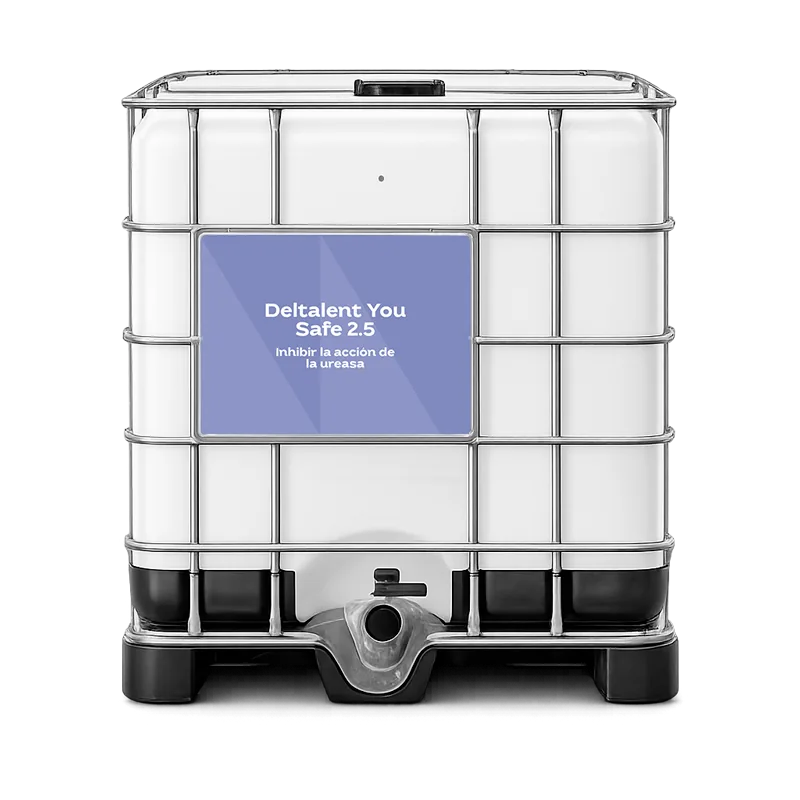 DeltaLent YoUsafe ForceUrease inhibitorReady-to-use, odorless 25% NBPT urease inhibitor, free of NMP and DMSO, for urea, UAN and urea-containing NPK blends.View product
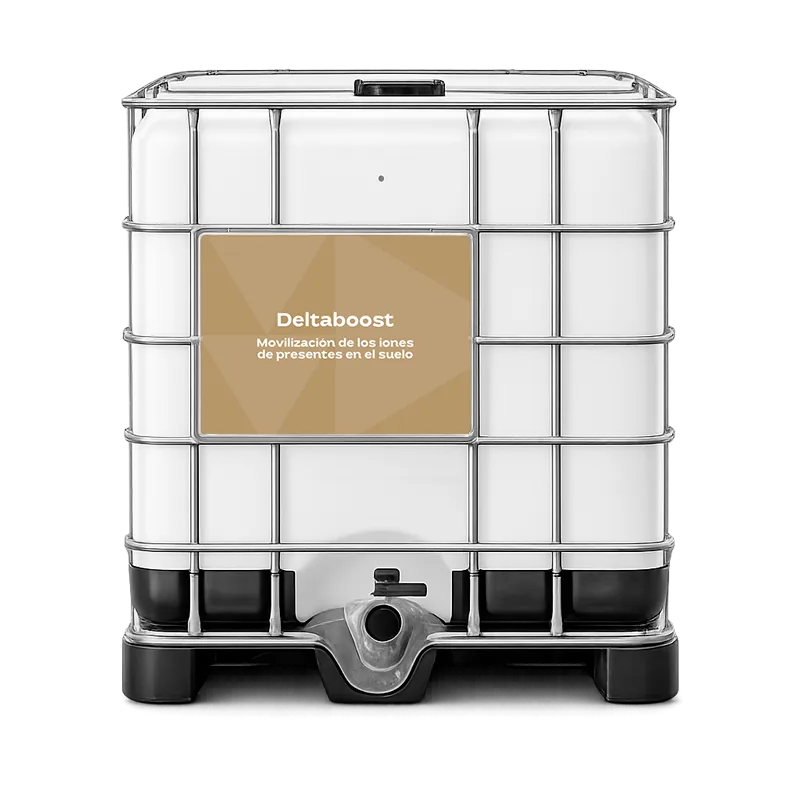 DeltaBoost Active NUrease inhibitorOrganic, biodegradable, water-based urease inhibitor (60% potassium polyaspartate) that reduces ammonia volatilization from urea fertilizers.View product
Why urea nitrogen is lost
Urea must be hydrolyzed before plants can use its nitrogen. Where and how fast that happens decides how much is lost.
Enzymatic hydrolysis and proton consumption
When urea dissolves in soil moisture or heavy dew, it meets urease, an enzyme produced by soil microbes and present at high levels on plant residue. Urease breaks uncharged urea down into ammonium and bicarbonate.
The reaction consumes hydrogen ions (H⁺) from the surrounding soil solution, so alkalinity rises sharply right next to the dissolving granule.
Even in acidic bulk soil (pH 5.5 to 6.5), uninhibited hydrolysis overwhelms the soil's buffering. Within 24 to 72 hours the pH within a few millimeters of the granule rises to 8.0–9.2.
Urea hydrolysis in the soil. It consumes H⁺ and raises the local pH.
The ammonium–ammonia equilibrium
In soil solution, ammonium (NH₄⁺) and ammonia gas (NH₃) exist in a pH-dependent equilibrium (pKa ≈ 9.25 at 25°C).
Below pH 7.0, over 99% of the converted nitrogen stays as positively charged, non-volatile NH₄⁺, which binds to negatively charged clay and organic matter (cation exchange capacity, CEC).
At pH 8.0 to 9.2, hydroxyl ions (OH⁻) strip protons from NH₄⁺ and shift the equilibrium sharply toward NH₃ gas. Because this happens at the surface, the gas diffuses into the air and is permanently lost.
Ammonium to ammonia equilibrium. Higher pH shifts it toward gas.
| Microsite soil pH | Ammonium (NH₄⁺), non-volatile | Ammonia gas (NH₃↑), volatile | Volatilization risk |
|---|---|---|---|
| pH 6.0 | 99.9% | 0.1% | Negligible |
| pH 7.0 | 99.4% | 0.6% | Low |
| pH 8.0 | 94.7% | 5.3% | High |
| pH 9.0 | 64.0% | 36.0% | Severe |
Because escaping NH₃ continually leaves the soil surface, the equilibrium keeps shifting to replace it. Even at pH 8.0, cumulative nitrogen loss over 5 to 7 days can exceed 30% to 40%.
Mechanism of action
A urease inhibitor interrupts the first step of the loss pathway, in three stages.
The inhibitor blocks the urease active site
Urease is a nickel-dependent enzyme with two nickel (Ni²⁺) ions at its catalytic core. In soil, NBPT quickly converts into its active oxon form (NBPTO), an analog of urea's transition state. It binds across both Ni²⁺ ions and locks the enzyme closed, deactivating urease for 7 to 14 days.
The pH spike is suppressed
With hydrolysis slowed, H⁺ is consumed gradually instead of all at once. The soil's natural buffering can neutralize the reaction as it happens, so the pH next to the granule does not reach the alkaline danger zone.
The incorporation window is extended
Intact urea is neutral and highly soluble, so it moves with water. Keeping it intact for up to two weeks gives 10 to 15 mm of rain or irrigation time to wash it 5 cm or deeper into the soil. When the inhibitor degrades, hydrolysis happens among soil colloids that trap every NH₄⁺ ion produced.
Without and with an inhibitor
What happens to urea nitrogen in the soil.
Without an inhibitor
Ammonia loss peaks on days 2 to 4. On average 31.0% of applied N is lost, and over 45% in high-residue, warm conditions.
With an inhibitor
Loss peaks later, on days 7 to 14 or beyond. On average 14.8% of applied N is lost, often under 5% when it rains within 10 days.
When urease inhibitors matter most
Ammonia loss risk rises under these conditions.
Surface-applied urea or UAN
Fertilizer left on the surface is exposed to urease and to the air.
Crop residue and no-till
Urease activity on surface residue and pasture thatch is 10 to 30 times higher than in bare soil, and granules lying on residue do not touch soil clay.
Marginal moisture
Damp soil or heavy dew followed by drying wind dissolves the granule but does not wash the urea into the soil.
Light, low-CEC soils
Sandy or low-organic-matter soils buffer H⁺ poorly and hold less NH₄⁺, so the pH rises faster and higher.
Warm temperatures and wind
Heat speeds up urease and NH₃ diffusion, and wind carries ammonia away from the soil surface.
High initial soil pH
Calcareous or alkaline soils (pH above 7.5) already sit near the NH₄⁺ / NH₃ tipping point.
Agronomic value and yield impact
Peer-reviewed global meta-analyses comparing NBPT-treated urea with untreated surface-applied urea show consistent, significant field returns.
| Performance metric | Untreated surface urea | Urea + urease inhibitor (NBPT) | Net advantage |
|---|---|---|---|
| Peak volatilization timing | Days 2–4 after application | Delayed to days 7–14 or later | 5 to 10 extra days for rain or irrigation to incorporate the urea |
| Average NH₃ loss | 31.0% of applied N (45% or more in high-residue, warm conditions) | 14.8% of applied N (often under 5% when rain falls within 10 days) | 52% to 54% average reduction in nitrogen loss to the air |
| Crop yield response | Baseline (100%) | 105.3% to 113.0% | 5.3% to 13.0% higher yield across cereal, forage and cash crops |
| Nitrogen use efficiency (NUE) | Reduced by surface nitrogen depletion | Nitrogen pool preserved in the root zone | More grain or biomass per kg of N applied |
Why preserving surface nitrogen drives higher yields
Four ways a protected nitrogen dose pays back in the field.
Larger root-zone nitrogen pool
Keeping 15% to 30% of applied N from escaping means the full intended dose reaches the roots to support chlorophyll synthesis, tillering and grain or fruit fill.
Metered ammonium supply
Moderated hydrolysis paces nitrogen into the soil solution instead of releasing a surge within 48 hours, matching crop uptake better and reducing early luxury consumption.
Protection from ammonia toxicity
High free NH₃ and pH near the surface can burn shallow feeder roots and damage germinating seedlings. Regulating hydrolysis removes this risk.
Operational flexibility
Growers can top-dress or broadcast urea on dryland, pasture, orchard or no-till land without timing it just before a storm or paying for tillage.
What urease inhibitors provide to crops
Benefits of treating urea-containing fertilizers with a urease inhibitor.
Lower ammonia volatilization
Reduces ammoniacal N volatilization from urea-containing fertilizers.
More nitrogen for the crop
Less nitrogen escapes into the air, so more stays available in the soil.
Greater timing flexibility
A wider window for rainfall or irrigation to incorporate the urea.
Works with common fertilizers
Suitable for urea, UAN, NPK blends and other urea-containing fertilizers.
Clean formulation
Odorless NBPT formulation, free of NMP and DMSO and made with food/pharma-grade solvents.
Biodegradable option
Organic, water-based option based on potassium polyaspartate (KPA).
Product comparison
Key characteristics of the two urease inhibitors.
| YoUsafe Force 2.5 | DeltaBoost Active N | |
|---|---|---|
| Active ingredient | NBPT, 25% w/w guaranteed (26.0% typical) | Potassium polyaspartate (KPA), 60% |
| Form | Ready-to-use liquid | Water-based liquid |
| Character | Odorless, free of NMP and DMSO | Organic and biodegradable |
| Suitable for | Urea, UAN, NPK blends and other urea-containing fertilizers | Granular urea and solids (≥50% urea N), liquid urea-containing fertilizers, urea-based NPK blends |
Two ways to protect urea nitrogen
Urease inhibitors act through different mechanisms. Read how each one works.
NBPT: targeted chemical inhibitor
Blocks the nickel active site of urease with high potency for 7 to 14 days.
KPA: biodegradable urease inhibitor
A water-soluble biopolymer that modulates urea hydrolysis through chelation and shielding while improving root growth and nutrient uptake.
Key scientific references
- Cantarella, H., Otto, R., Soares, J. R., & Silva, A. G. B. (2018). Agronomic efficiency of NBPT as a urease inhibitor: A review. Journal of Advanced Research, 13, 19–27. https://doi.org/10.1016/j.jare.2018.05.008
- Silva, A. G. B., Sequeira, C. H., Sermarini, R. A., & Otto, R. (2017). Urease Inhibitor NBPT on Ammonia Volatilization and Crop Productivity: A Meta-Analysis. Agronomy Journal, 109(1), 1–13. https://doi.org/10.2134/agronj2016.04.0200
- Pan, B., Lam, S. K., Mosier, A., Luo, Y., & Chen, D. (2016). Ammonia volatilization from synthetic fertilizers and its mitigation strategies: A global synthesis. Agriculture, Ecosystems & Environment, 232, 283–289. https://doi.org/10.1016/j.agee.2016.08.019
- Manunza, B., Deiana, S., Pintore, M., & Gessa, C. (1999). The binding mechanism of urea, hydroxamic acid and N-(n-butyl)-phosphoric triamide to the urease active site: a comparative molecular dynamics study. Soil Biology and Biochemistry, 31(5), 789–796.
Grow with Kingenta Let's build a sustainable future together
Whether you need bulk commodity supply, custom OEM formulation, or regional distribution partnership, Kingenta delivers global scale with tailored regional service.