
Fertigation delivers nutrients dissolved in irrigation water. Frequent small doses match the crop's uptake more closely than a single broadcast, which reduces losses and can improve efficiency in drip and sprinkler systems. It is widely used in protected crops, orchards and high-value field crops, where water and nutrient supply can be controlled precisely.
Fertigation is not simply a way of applying fertilizer through a pipe. It changes the whole programme. The grower decides the nutrient concentration, the timing of each dose and the water volume, and the system must deliver the solution evenly to every plant. A failure in any of these areas can reduce the benefit, so fertigation rewards careful planning and regular checking.
Conditions that suit fertigation
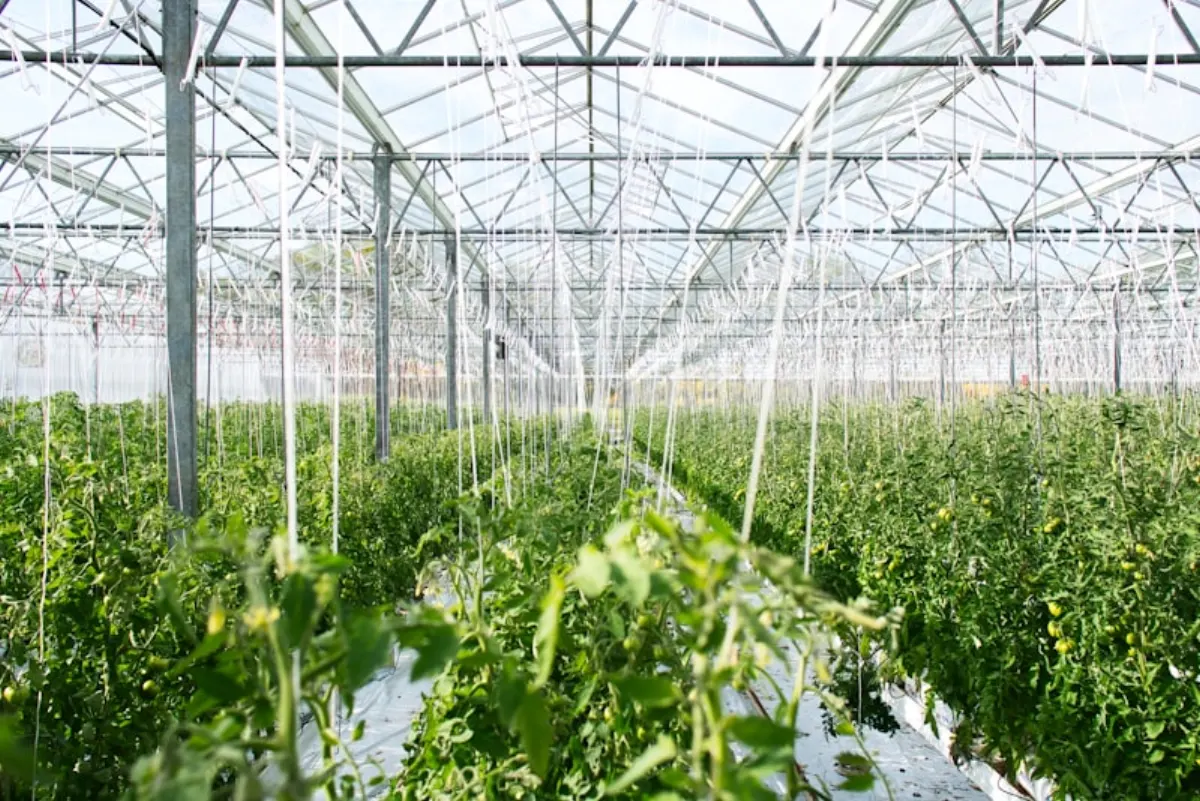
The first requirement is an irrigation system with uniform flow, such as drip or micro-sprinkler, that can be maintained and checked. Emitter uniformity determines how evenly the nutrient reaches the roots, and a system with blocked or uneven emitters will give uneven crop growth. Uniformity should be measured at the start of the season and checked again during it.
- An irrigation system with uniform flow, such as drip or micro-sprinkler, that can be maintained and checked.
- Products that dissolve fully in water at the concentration used, with low salt and no insoluble residue.
- Crops with a high demand over a long period, such as vegetables, fruit and protected crops, where the frequent small doses fit the uptake pattern.
- A reliable water source with known quality, because the water chemistry changes the nutrient plan.
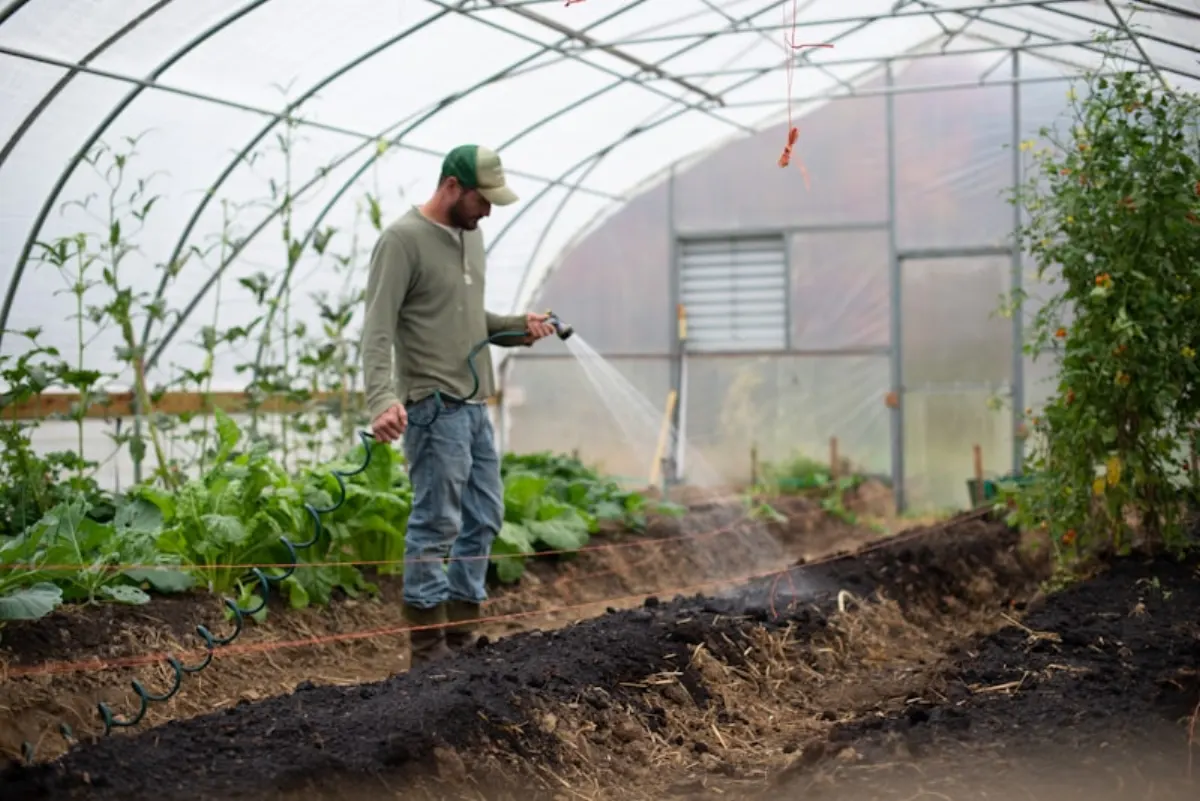
The second requirement is a product that dissolves fully. Granular or partly soluble fertilizers will leave residue that blocks filters and emitters. Water-soluble grades are designed for fertigation, and their technical data gives the solubility, the salt index and the compatibility with other products. Choosing a product for fertigation should always start from this data, not from the nutrient content alone.
The third requirement is a clear plan for the water. Irrigation water quality determines whether the system can deliver the nutrients as intended. High bicarbonate water can precipitate calcium and phosphate in the lines, and high iron or hardness can block emitters. The water should be tested before the programme is designed, and the recipe should be adjusted to suit.
Keeping the system working
Blockage is the most common failure in fertigation. Check the water source and filter the solution. Mix products in the order given on the label, and avoid combining calcium and phosphate or sulphate sources in the same concentrated stock tank, because they can form precipitates. Flush the lines after each application, so that residue does not build up between irrigations.
Filters should be cleaned on a fixed schedule, and the pressure readings across the filter should be recorded. A rising pressure difference shows that the filter is blocking, and it is much cheaper to clean the filter early than to replace emitters later. A simple log of cleaning dates, pressures and flow rates is one of the most useful tools a fertigation grower can keep.
Planning a fertigation programme
Set the total nutrient requirement for the season from the soil test, the yield target and the crop's removal. Divide it by the crop stage, then split it into weekly or daily doses that match the uptake curve. The early stages need less nutrient in absolute terms, while the period of rapid growth and fruit or tuber filling needs the most. A clear plan shows the amount of each nutrient per week, which can then be checked against the field.
Adjust the programme for the weather and the crop condition. A hot, dry week increases the water need and the uptake, while a cool, wet week reduces both. The grower should check the electrical conductivity and pH of the solution regularly, at the start and end of the line, and compare the readings with the target. A difference between the two ends of the line shows uneven distribution.
- Set the total nutrient requirement for the season and divide it by crop stage.
- Prepare stock solutions in separate tanks where products would otherwise react.
- Check the solution's electrical conductivity and pH at the start and end of each line.
- Adjust the weekly dose for weather, crop condition and the results of tissue tests.
Monitoring and adjusting the programme
A tissue test at key stages shows whether the crop is taking up the nutrients the programme intends. Sample the same leaf position and growth stage each time, and compare the results with the sufficiency range for the crop. If the test shows a shortage, adjust the recipe for the next period rather than doubling the dose, which can cause salt damage and imbalance.
The drainage solution is a useful check. Measure the electrical conductivity and pH of the water that drains from the root zone, and compare it with the feed. A drainage reading much higher than the feed shows salt build-up, which calls for a recipe change or a leaching cycle. A drainage reading lower than the feed shows that the crop is taking up nutrients well, or that some of the solution is moving past the root zone.
Getting started with fertigation
Start with a small block, a simple recipe and regular monitoring. Expand once the system is working well and the team understands how to adjust the feed. A common mistake is to switch the whole farm to fertigation at once, which makes it hard to tell which change caused a problem. A small block gives a clear baseline and a place to learn.
Choosing a fertigation system
Drip systems give the most uniform and precise delivery, and they suit most high-value crops. Micro-sprinklers cover a wider area and suit orchards and some field crops, but they are more affected by wind and evaporation. The choice of system should follow the crop, the field layout and the water source, and it should be made before the fertigation programme is designed.
Whatever the system, inspect the emitters before each season. A quick check of flow at several points along the line shows whether the system is delivering evenly, and a check of the filter shows whether the water quality is stable. Early repair is much cheaper than a season of uneven crop growth.
Compatibility in the stock tank
Stock solutions are concentrated, so products that react with each other must be kept apart. Calcium nitrate and sulphate-based products, or calcium and phosphate, should be prepared in separate tanks, and the injection system should be designed to bring them together only in the diluted solution. A compatibility chart from the supplier shows which products can be mixed and which must be kept separate.
Check the stock solution regularly for crystals or cloudiness. Deposits in the tank show a problem that will reach the emitters if it is not corrected. Clean the tanks between changes of product, and never reuse a tank that has held a different formulation without flushing it first.
Common questions
Which crops suit fertigation best? High-value crops with a long season and high nutrient demand usually suit fertigation, such as vegetables, fruit and protected crops. Field crops can use it too, when the irrigation system allows it and the economics support it.
Can I apply all the fertilizer through the system? Most programmes apply part of the nutrient through the soil and part through the irrigation. The split depends on the crop, the soil and the uniformity of the system, and a soil application before planting is often used to build the base.
What if the system blocks during the season? Stop the fertilizer injection, flush the lines with clean water, and check the filters and emitters. Identify the cause before restarting, because the same blockage will come back if the water or product is the problem.
- Haifa Group, NutriNet and fertigation resources for crops under drip and sprinkler irrigation.
- Yara, public crop nutrition guidance on fertigation.
- International Plant Nutrition Institute (IPNI), nutrient management resources for irrigated systems.
- Burt, C., O'Connor, B. and Ruehr, T., published guide on fertigation for irrigated crops (academic and extension literature).
Recommendations depend on local soil, climate and crop conditions. Follow the product label and local regulations, and consult a qualified agronomist for field decisions.