
Most crops perform best in a soil pH near neutral, roughly 6 to 7 for many crops, although the exact optimum depends on the crop and the soil. Outside that range, some nutrients become less available and others can reach levels that are toxic to plants. Because pH controls the chemistry of the soil solution and the surfaces of soil particles, it is one of the most important properties to measure and manage.
pH is measured on a logarithmic scale, so a change of one unit represents a tenfold change in hydrogen ion concentration. A soil that drops from 6.5 to 5.5 has become ten times more acidic, which is a large shift for the nutrient chemistry. This is why small changes in the numbers can produce large changes in crop response, and why trends matter as much as single readings.
The availability pattern
In acid soils, phosphorus binds to aluminium and iron oxides, and molybdenum becomes less available. Aluminium, iron, manganese and copper become more soluble, and at low pH they can reach levels that are toxic to roots. In alkaline soils, phosphorus binds to calcium, while iron, zinc, manganese and boron become less available. The pattern is why a single pH number can explain several symptoms at once.
Nitrogen availability also depends on pH, through the microbial processes that convert it. Nitrification is slowed at very low pH and very high pH, and it is most active in the near-neutral range. Ammonia loss from urea is higher at high pH, because more of the ammonium is converted to ammonia gas. These effects link the pH decision to the nitrogen plan.
| Soil pH | Likely problem | Typical response |
|---|---|---|
| Below 5.5 | Aluminium toxicity, low phosphorus and molybdenum | Liming, choose a suitable phosphate form |
| 6.0 to 7.0 | Generally the most available range for most nutrients | Maintain with a soil test |
| Above 7.5 | Iron, zinc, manganese and phosphorus lock-out | Acidifying inputs and micronutrient programmes, checked by tissue test |

Liming and acidifying
Lime raises soil pH and should be applied according to a lime requirement test, not a fixed rate. The lime requirement depends on the current pH, the target pH, the buffering capacity of the soil and the fineness of the lime. Sandy soils need less lime than clay soils to reach the same pH change, because they have less buffering capacity.
Acidifying inputs can lower pH slowly, but their effect depends on the soil buffering capacity and on the rate of application. Ammonium fertilizers are the most common acidifying input in arable systems, and sulphur can acidify soils when it is oxidised. Changes in pH take months to years, so plan lime applications well before the crop needs them, and do not expect a rapid correction after a single application.
Planning lime and fertilizer together
The lime plan and the fertilizer plan should be made together. A grower who applies large amounts of ammonium fertilizer without liming will see pH fall over time, and a grower who over-limes will see micronutrient deficiencies appear. A simple approach is to record the fertilizer type and rate each season, and to adjust the lime programme when the pH trend shows a change.
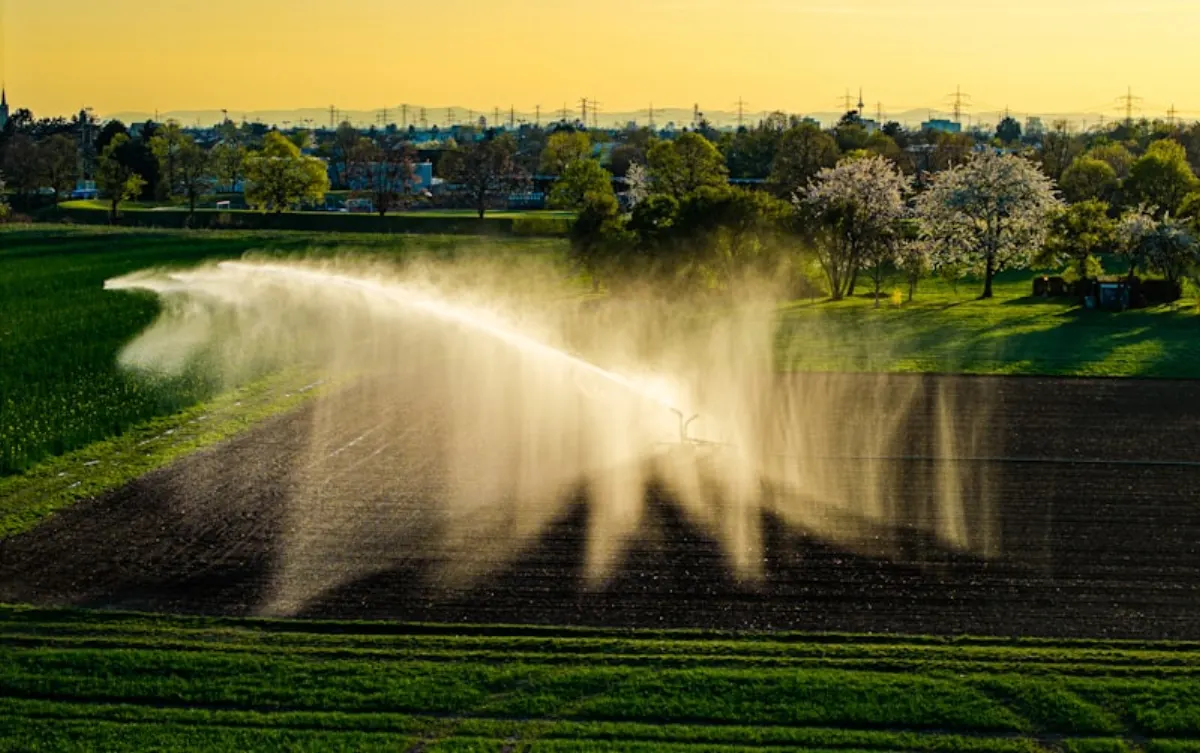
Irrigation water is an often-overlooked source of pH change. Water with high bicarbonate content tends to raise soil pH over time, while acidic water can lower it. Testing the irrigation water for bicarbonate and pH alongside the soil gives a fuller picture of the factors acting on the soil.
Using pH in the nutrition plan
Once the pH is known, it shapes the rest of the nutrition plan. In acid soils, lime is the first step, and phosphorus placement may need to change to reduce fixation. In alkaline soils, the choice of micronutrient source matters: chelated forms can keep iron and zinc available where the soil would fix them, and foliar sprays can bypass the soil altogether.
- In acid soils, correct pH before relying on phosphate applications, because the phosphate will otherwise be fixed.
- In alkaline soils, use chelated micronutrients or foliar sprays when a tissue test confirms the deficiency.
- Choose the nitrogen form to suit the pH, since urea losses are higher at high pH and ammonium forms are more stable in some conditions.
- Recheck the pH before each planting cycle, so the plan adjusts to the actual soil.
Making the pH decision
The decision to lime or to acidify should be based on the soil test, the crop's pH preference and the cost of the correction. Liming is usually the most cost-effective long-term investment on acid soils, because it corrects the root zone for several seasons. Acidifying inputs are rarely used to lower pH deliberately, but they can be chosen to slow an upward trend in pH when the risk of micronutrient deficiency is high.
Testing and recording pH over time
A single pH value tells you the state of the soil on the day it was sampled. A record of several years shows the direction and speed of change, which is what the grower needs to plan lime and fertilizer. Use the same laboratory, the same method and the same sampling zones, so that the readings can be compared without the method changing the result.
Keep the pH record alongside the fertilizer and lime records. When the pH trend and the fertilizer history are shown together, it is easy to see which practice drives the change, and the plan can be adjusted in the right place. Many growers find that the pattern reveals an area of the field that needs separate treatment.
Differences in pH within a field matter as much as the average. Map the pH across the field if the soil varies, and treat the areas with different needs separately, rather than applying one rate to the whole field. Zone liming is often more cost-effective than a uniform application, because it puts the lime where it is needed.
pH and crop choice
Some crops tolerate a wider pH range than others. Blueberries and potatoes prefer acid soils, while alfalfa and many vegetables prefer near-neutral or slightly alkaline soils. When the pH of a field is far from the crop's preference, the choice of crop may be a better decision than a large lime or acidifying programme, provided the market and the rotation allow it.
The pH preference of the crop should be part of the planning from the start. A field that is naturally acid may be better suited to a crop that tolerates acidity, while a field that is alkaline may suit a crop that needs more calcium. Discuss the options with the adviser before planting a new crop on a field with an unusual pH.
Common questions
How long does lime take to work? Lime reacts slowly and moves down the profile over months to years. Apply it well before the crop needs the change, and check the pH after each season.
Can I lower pH quickly? Quick changes are not practical in most soils. Acidifying inputs work slowly, so the aim is to adjust gradually and monitor the trend.
Does pH affect water? Yes. Soil pH changes the solubility of some salts and the performance of irrigation water. Check both when designing a fertigation programme.
- FAO, soil acidity and liming resources (Global Soil Partnership).
- Soil Health Institute, public materials on soil pH and nutrient availability.
- University extension publications on lime requirement and nutrient availability across the pH range.
- Havlin, J.L. et al., Soil Fertility and Fertilizers (academic textbook on nutrient availability and pH).
Recommendations depend on local soil, climate and crop conditions. Follow the product label and local regulations, and consult a qualified agronomist for field decisions.