
Soil organic matter is the decomposing plant and animal material in the soil, along with the living organisms that break it down and the stable humus that remains after decomposition. It is usually a small share of the soil by weight, often a few percent in cultivated soils, but it has a large effect on nutrient supply, water holding, soil structure and biological activity. Small changes in organic matter can therefore make a noticeable difference to yield and to the amount of fertilizer a field needs.
Organic matter is also one of the few soil properties that a grower can change deliberately. Soil texture and parent material are fixed, but the amount of organic matter depends largely on management: how much residue is returned, how often the soil is disturbed, and whether it is kept covered. That makes organic matter an important indicator of how a farm is being managed over time.
What organic matter does for the soil
- Releases nutrients slowly as it decomposes, supplying part of the crop's nitrogen, phosphorus and sulphur.
- Holds cations such as potassium, calcium and magnesium on its charged surfaces, which reduces nutrient loss by leaching.
- Helps soil hold water and resist crusting, so roots have more reliable moisture between rains.
- Binds soil particles into aggregates that resist erosion and make tillage easier and less energy-intensive.
The cation exchange capacity contributed by organic matter is particularly valuable on sandy soils, where the mineral fraction holds little nutrient. Adding organic matter can therefore improve the efficiency of a fertilizer programme on these soils, even when the total nutrient supply is unchanged. The same applies to water: a sandy soil with more organic matter holds more plant-available water and buffers the crop against short dry spells.
Deposits: what adds organic matter
The main inputs are crop residues, manure, compost, green manures and cover crops. Leaving residues on the field rather than burning or removing them is one of the simplest and cheapest deposits, and it is available to every grower. Where residues are removed for feed or fuel, the balance becomes negative, and the decline in organic matter may not be visible for several years.
Animal manures and composts add both organic matter and nutrients, but the mix varies widely. Fresh manure releases nitrogen quickly, while well-decomposed compost supplies organic matter with less immediate nitrogen. Cover crops add biomass during periods when the soil would otherwise be bare, and legume covers can add nitrogen as well. Reduced tillage slows the rate at which existing organic matter breaks down, which keeps more of the deposit in the soil.
Withdrawals: what removes it
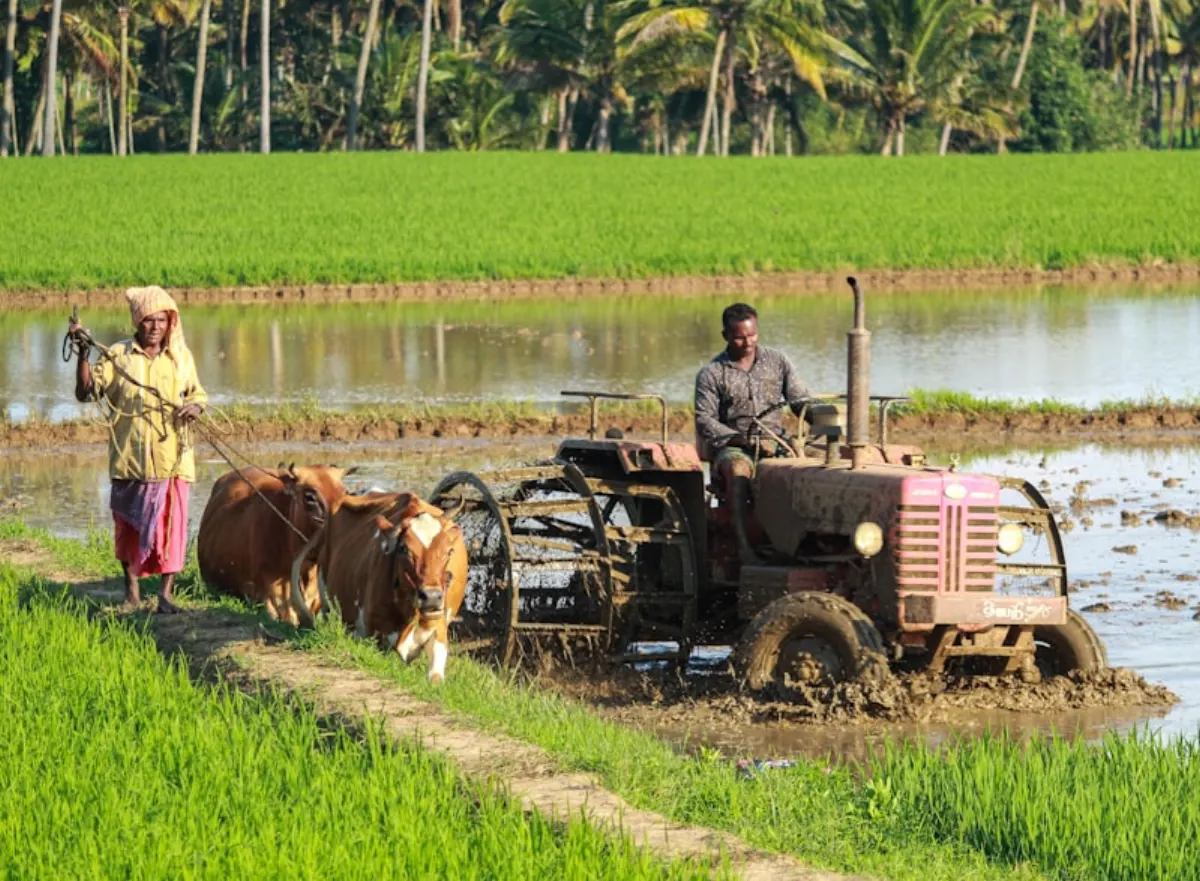
Tillage speeds up decomposition by exposing organic matter to air and by breaking up the aggregates that protect it. Each pass of the plough or the cultivator can release a significant share of the carbon in the surface layer. Erosion carries the surface soil, which is richest in organic matter, away from the field. Bare fallows and high temperatures also increase losses, because the soil microbes decompose organic matter faster when it is warm and moist.
A field can lose organic matter steadily even when yields look normal. The yield may be sustained for several years by the reserve in the soil, and the decline only becomes obvious when the reserve is depleted and the crop begins to respond poorly to fertilizer. The trend therefore matters more than a single reading, and the record should show whether the field is gaining or losing organic matter over time.
Running the balance
Think of the field as an account. If withdrawals consistently exceed deposits, organic matter will fall, and the soil will supply less nutrient and water over time. Changing the balance takes years. Most programmes measure organic matter every three to five years using the same laboratory method, so the trend can be compared. Consistent sampling and analysis are as important as the measurement itself.
The balance also depends on the climate. In warm, wet regions, organic matter decomposes quickly, so the deposits needed to maintain it are larger than in cool, dry regions. A grower in a tropical region may need to add more residue and organic inputs than a grower in a temperate region to achieve the same level of organic matter. The plan should therefore be set for the local climate and the crop, not copied from another region.
Link to fertilizer decisions
Organic matter changes how much nitrogen the soil supplies. Fields with high organic matter may need less supplemental nitrogen, while fields that have been depleted may respond strongly to nutrient inputs. A common approach is to estimate the mineralisable nitrogen from the organic matter content and to subtract it from the crop's total requirement, so that the mineral fertilizer covers only the gap.
Use the soil test and the crop history together when setting a fertilizer plan, and treat organic matter as part of the nutrient budget. A grower who adds manure or compost should credit the nutrients it supplies, and adjust the mineral fertilizer accordingly. Over-crediting leads to deficiency, and under-crediting leads to surplus and loss, so the accounting should be checked against the crop response.
Choosing practices for your farm
No single practice builds organic matter on every farm. Residue retention is the cheapest and most widely available option, but it may not be enough on fields that have lost a lot of carbon, and it can complicate planting and pest management where residue is heavy. Cover crops add biomass in the off-season, and they suit farms with a suitable gap between cash crops. Compost and manure add organic matter quickly, but supply is limited and transport can be expensive.
The best approach combines two or three practices that fit the farm's equipment, labour and markets. A grower with livestock may rely on manure, while a grower in a cropping system may choose cover crops and reduced tillage. Starting small and adding practices over time usually works better than an abrupt change that is hard to sustain.
Measure the effect on the soil and the crop. Organic matter changes slowly, so the first useful signals may be improved water infiltration, better aggregate stability and reduced crusting, which can be observed within a few seasons. These signs tell the grower that the soil is responding, even before the laboratory value moves.
Organic matter and water
Organic matter holds many times its own weight in water, so each percentage point gained in a sandy soil can add a meaningful amount of plant-available water to the root zone. That buffer matters most in the short dry spells that are common in many growing seasons, when a crop with good organic matter can keep growing while a neighbouring crop on depleted soil begins to wilt.
Water and organic matter also interact through infiltration. A soil with stable aggregates lets rain soak in rather than run off, which reduces erosion and the loss of the surface soil that carries most of the organic matter. Growers who see less ponding and less crusting after rain are often observing the effect of organic matter long before the laboratory value changes.
Common questions
How quickly can organic matter change? It changes slowly. A change of a few tenths of a percent can take several years, even with a good programme. The aim is steady improvement, measured over the rotation rather than season to season.
Is compost always better than manure? Not always. Compost supplies organic matter with less immediate nitrogen, which can be an advantage where nitrogen is already adequate. Manure supplies more nutrient quickly. The right choice depends on the soil's needs and on the nutrient content of each material.
Does tillage always lose organic matter? Tillage increases decomposition, so frequent or deep tillage tends to reduce organic matter over time. Some tillage may still be needed for seedbed preparation, and the goal is to reduce it where the crop and the system allow, rather than to eliminate it entirely.
- FAO, Global Soil Partnership and soil organic carbon guidance (Global Soil Organic Carbon Map and related materials).
- Soil Health Institute, public materials on soil organic matter and carbon.
- International Plant Nutrition Institute (IPNI), nutrient management and soil organic matter resources.
- Lal, R., published work on soil organic carbon sequestration in agricultural systems (academic literature).
Recommendations depend on local soil, climate and crop conditions. Follow the product label and local regulations, and consult a qualified agronomist for field decisions.