
Continuous monoculture allows pests and pathogens that depend on one crop to build up in the soil. Yield losses are often blamed on fertility, because the crop looks short of nutrients, but the cause can be biological. A field that has grown the same crop for many years may show a yield decline that no amount of fertilizer can fully correct.
The problem is common in intensive systems, where one crop is grown for a long time because it is profitable. The short-term gain can be lost in later seasons, when the disease pressure and the nutrient imbalance build up. Rotation is the oldest and most reliable answer, and it remains the core of most sustainable systems.
Causes
- Soil-borne pathogens and nematodes that increase when the host crop is present each year.
- Nutrient imbalance, because one crop removes the same nutrients repeatedly and leaves others in surplus.
- Allelopathic compounds released by some crop residues, which can slow the growth of the next crop.
- Reduced soil biodiversity under repeated, uniform management, which weakens the natural control of pests.
Each cause has a different signature. A pathogen problem shows as patches of poor growth, root rot or wilting that spread across the field. A nutrient imbalance shows as a pattern tied to a particular nutrient, and it can be confirmed by a soil and tissue test. An allelopathic effect shows as slow germination and poor early growth, especially after a crop with known residue compounds.
Designing a rotation
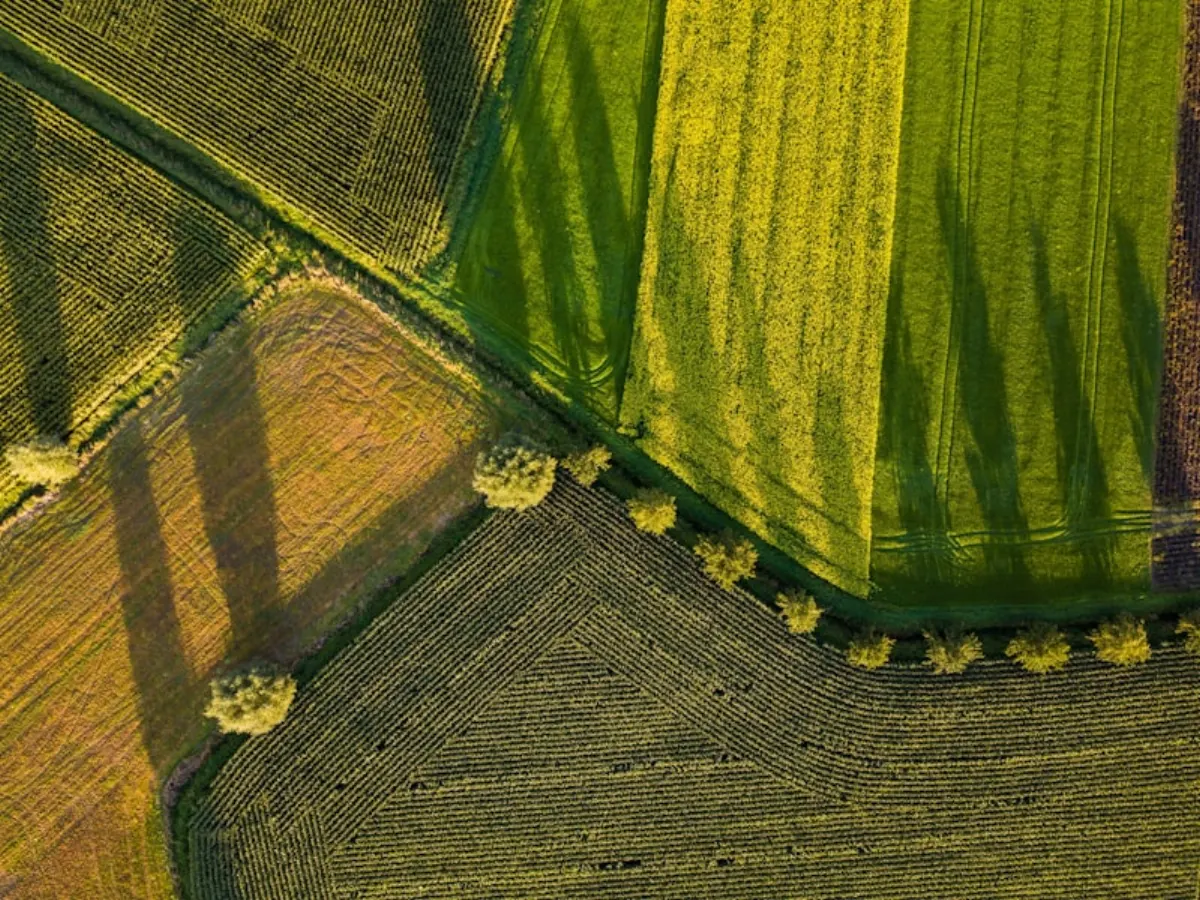
A good rotation alternates crop families, includes a deep-rooted crop or a cover crop, and balances the nutrient demand of each crop. Include at least one non-host crop for the main pathogens of the cash crop, and plan the rotation for the whole farm rather than field by field. A rotation of three to four years is common for many annual crops, and longer breaks are needed for the most persistent pathogens.
The rotation should also consider the nutrient demand. A heavy feeder followed by a light feeder allows the soil to recover, while two heavy feeders in a row can deplete a nutrient quickly. Legumes in the rotation can supply nitrogen to the following cereal, and the fertilizer plan can be reduced accordingly.
| Rotation element | Purpose | Example |
|---|---|---|
| Non-host crop | Breaks the pathogen cycle | Cereal after a broadleaf crop |
| Legume | Adds nitrogen and breaks the cycle | Pulse crop in the rotation |
| Deep-rooted crop | Uses water and nutrients from deeper layers | Alfalfa or a deep-rooted cover |
| Cover crop | Protects soil and adds organic matter | Mixed cover between cash crops |
Fixes
Rotation with non-host crops is the most reliable fix. Cover crops and residue management add organic matter and diversity. Soil disinfection or biological amendments can help in specific cases, but their use depends on local regulation and evidence. Resistant varieties, where they exist, are a valuable part of the fix, and they should be used alongside the rotation.
Biological amendments, such as compost and microbial products, can support the soil community and suppress some pathogens. Their effect is usually modest and varies between fields, so they should be used as part of a broader plan rather than as the main control.
Managing the transition
Changing a long monoculture to a rotation takes time. The first season may show little difference, and the benefit may only appear after two or three seasons of the new sequence. Growers should expect this, and should record the disease, pest and yield results to show the trend.
The transition may also need changes in machinery, markets and labour. A new crop may need different equipment, a different buyer or different handling, and these should be planned before the rotation starts. A grower who plans the economics of the rotation is more likely to stick with it through the transition.
Recording disease and pest history
Record the disease and pest history of each field. When a problem recurs, the record helps you choose a longer break or a different sequence, instead of relying on memory when the season is already under way. A simple table with the crop, the season, the problem and the action taken is enough for most farms.
Share the record with the adviser and, where possible, with neighbouring growers. Pathogens and pests move across farms, so a regional view of the problems helps everyone choose the right rotation and the right timing for control.
Weeds, insects and continuous cropping
Monocropping also changes the weed and insect populations. A crop grown every year selects for weeds that thrive in the same conditions, and for insects that feed on that crop. Some weeds develop resistance to herbicides when the same product is used year after year, which makes the problem harder to control.
Rotation changes this pressure. A new crop brings a different herbicide programme, a different set of competing weeds and a different insect community. The benefit is greatest when the rotation includes crops that differ in their growth habit and their timing.
Herbicide rotation, using products with different modes of action, is also part of a good programme. Rotating crops and products together reduces the selection pressure on the weeds.
Common questions
How long should a rotation break be? It depends on the pathogen and the crop. Many soil-borne problems need a break of two or more years from the host crop, but the break should be set using the disease history of the field.
Does a cover crop help? Yes, when it is chosen for the problem. Some cover crops suppress weeds and nematodes, while others add organic matter. Check that the cover crop is not a host for the main pathogen.
Can fertilizer alone fix it? No. Fertilizer corrects nutrient imbalance, but it does not remove the pathogen or restore soil biodiversity. Rotation and residue management address the underlying causes.
- FAO, public materials on soil-borne disease and crop rotation.
- Published reviews on continuous cropping and soil health (academic literature).
- University extension publications on crop rotation planning and disease management.
- Bennett, A.J. et al., published review on crop rotation effects on soil biology and disease (academic literature).
Recommendations depend on local soil, climate and crop conditions. Follow the product label and local regulations, and consult a qualified agronomist for field decisions.