
The world population passed eight billion in 2022, and United Nations projections show continued growth before it levels off later in the century. Food demand is rising at the same time as the land available for farming is under pressure from urbanisation, soil degradation and climate change. Higher yields on existing land are therefore central to food security, and fertilizer is one of the main tools that make those yields possible.
The question is not whether fertilizer matters, but how it can be used well. Crops need a continuous supply of nutrients to produce grain, fruit and tubers, and the soil alone cannot always provide them at the rate needed for high yields. Using fertilizer efficiently ensures that the nutrients reach the crop, that the food is produced, and that losses to air and water are kept low.
Yields depend on nutrient supply
Crops remove nutrients every time they are harvested. A tonne of maize grain removes a substantial amount of nitrogen, phosphorus and potassium, and the same is true of rice, wheat and most other crops. Without replacement, soil fertility falls, and yields fall with it. Fertilizers replace the nutrients removed and supply the extra needed to reach higher yield targets, and the contribution of fertilizer to yield has been well documented in many studies.
The effect of fertilizer varies with the crop, the region and the soil. On soils that are already fertile, the response to fertilizer may be small. On depleted or sandy soils, the response can be large. Yield gains from fertilizer are also linked to other inputs: improved varieties, irrigation and crop protection work best when the crop is adequately nourished, so fertilizer is often one part of a package that raises yields together.
The nutrient gap
In many regions, the nutrients removed by crops still exceed the nutrients returned to the soil, and the soil is slowly mined. This gap is often most visible in smallholder systems with limited access to fertilizer, where yields are well below their potential and the soil continues to lose fertility. Closing the gap is one of the most direct ways to improve food supply, because it raises yields on land that is already farmed.
The gap also exists in some high-input systems, where fertilizer is applied in excess and some nutrients accumulate in the soil while others are short. Balancing the nutrient budget, rather than simply increasing or decreasing the total, is the aim. A balanced system uses fertilizer where the crop needs it and removes the surplus from the cycle.
Efficiency matters as much as quantity
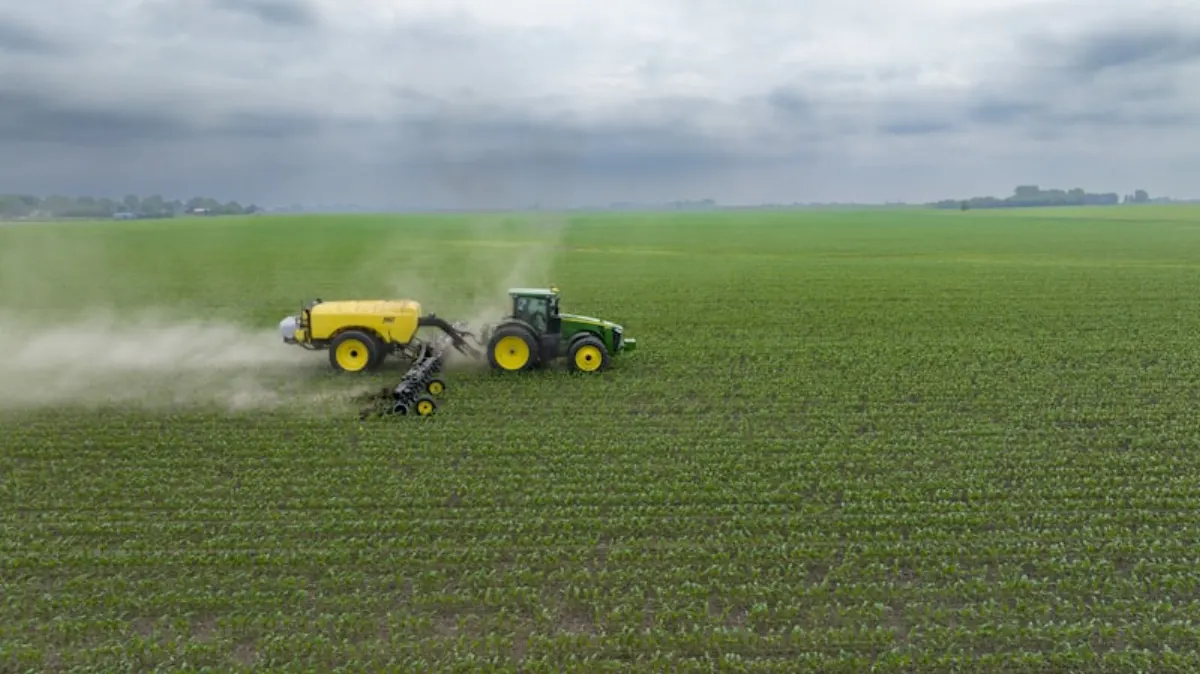
Using fertilizer more efficiently means that less is lost to air and water and more reaches the crop. That protects the environment and keeps the cost per tonne of food lower, which benefits growers and consumers alike. The 4R framework (right source, rate, time and place) is the common way to describe this approach across the industry, and it gives a practical structure for improving efficiency on any farm.
Efficiency improvements can come from many small changes: testing the soil, matching the rate to the crop's need, splitting applications, placing fertilizer near the roots, and choosing products that reduce losses. Each change may save only a little, but across millions of hectares the total effect on food supply and on the environment can be large.
What this means for the industry
Growers, distributors and manufacturers all share a role in making fertilizer use efficient and accessible. Clear guidance, sound product data and trials that reflect local conditions help growers make better decisions. Distributors can help by matching products to local needs and by supporting soil testing. Manufacturers can help by giving accurate information about how their products perform and where they are most useful.
Governments and development agencies also have a role, particularly in making fertilizer affordable and available to smallholders. Access and information are as important as the product itself. Programmes that combine fertilizer supply with training and soil testing have shown stronger and more lasting results than programmes that supply fertilizer alone.
A balanced view
Fertilizer is sometimes presented as either essential or harmful. A more useful view is that fertilizer is essential when it is used well and harmful when it is misused. Over-application wastes money and can damage water quality, while under-application leaves the crop and the soil depleted. The goal is the right amount, in the right place, at the right time.
- Fertilizer replaces nutrients removed by harvest and supplies the extra needed for higher yields.
- Its benefit depends on the crop, the soil and the rest of the management package.
- Efficient use reduces losses, costs and environmental effects, and it improves food production.
- Clear information and access for growers are as important as the product itself.
Fertilizer and the rest of the food chain
Fertilizer production, distribution and application are part of a longer chain that includes storage, processing, transport and retail. Losses at each step reduce the food that reaches consumers, so efficiency at the farm gate is only one part of the picture. Improvements in storage and logistics can therefore have a similar effect on food security as improvements in fertilizer use.
Food security also depends on access and affordability. Growers who cannot afford fertilizer or who lack access to advice may use too little, and their yields will suffer. Credit schemes, cooperatives, and fair markets for crops all help growers buy the inputs they need, and they support the stable production that food security requires.
Finally, food security depends on the land itself. Fertilizer can keep a soil productive, but it cannot compensate indefinitely for erosion, salinisation or the loss of organic matter. Sustainable soil management and efficient fertilizer use are complementary, and together they make it possible to sustain yields over the long term.
Measuring the contribution of fertilizer
Estimating the contribution of fertilizer to yield is harder than it seems. Yield responds to fertilizer, but also to varieties, water, pests, weather and management, and the interactions between them are strong. Researchers therefore compare fertilized and unfertilized plots under the same conditions, or they use models that separate the effects. Any single percentage should be read with the method behind it.
For the public and for policy makers, the useful message is the range of response: fertilizer matters a great deal where the soil is poor and the crop has high potential, and less where the soil is already rich. A balanced account of this range is more persuasive than a single headline figure, and it helps the reader see where fertilizer investment will bring the greatest return.
Looking ahead
Feeding a growing population will depend on raising yields on land that is already farmed, while reducing the losses along the way. Fertilizer will remain part of that effort, but its role will change as growers adopt more precise tools, as soil health is better protected, and as losses to the environment become more costly. The aim is a system that produces more food with fewer inputs wasted.
The industry can contribute by investing in research, in clear information for growers and in products that match the needs of different regions. Governments can contribute by supporting access, research and fair rules. Together, these efforts make fertilizer part of a food system that is productive, efficient and sustainable.
Common questions
Is fertilizer bad for the environment? Fertilizer can cause losses to water and air when it is misused. The answer is better management, not zero use, because crops need nutrients to produce food, and the nutrients in the crop are removed from the field.
Can organic systems feed the world? Organic systems can be productive, but yields are often lower for some crops, and their nutrient supply depends on local inputs and on the availability of manure and compost. Each system has a role, and the choice depends on the region, the crop and the market.
Why do yields differ between countries? Yield differences reflect many factors, including fertilizer access, varieties, water, soil health, pests and disease, and the quality of advice. Fertilizer is an important part of the explanation, but not the only one.
- United Nations, World Population Prospects (2022 revision).
- International Fertilizer Association (IFA), Fertilizer 101 educational series and public materials on fertilizer and food production.
- FAO, public material on soil nutrients and food security (Soils for nutrition).
- Erisman, J.W. et al., published work on the role of nitrogen fertilizer in global food production (academic literature).
Recommendations depend on local soil, climate and crop conditions. Follow the product label and local regulations, and consult a qualified agronomist for field decisions.